North Dakota once had a high concentration of nuclear missiles, with most of the underground silos and above ground facilities developed in the 1960’s and 1970’s during the extreme arms race against the Soviet Union. It’s hard to imagine now that these were on alert 24 hours a day, 7 days week with the idea that the crew may have actually needed to carry out their mission. Ultimately this would’ve been close to an extinction event. Operating from the Grand Forks and Minot Air Force bases with numerous substations and radar installations, many were functioning in the the mid- to late-90’s until the Start II treaty was negotiated. For some great documentation of the largest radar base at Nekoma, ND check Ghosts of North Dakota here: http://www.ghostsofnorthdakota.com/category/nekoma-nd/
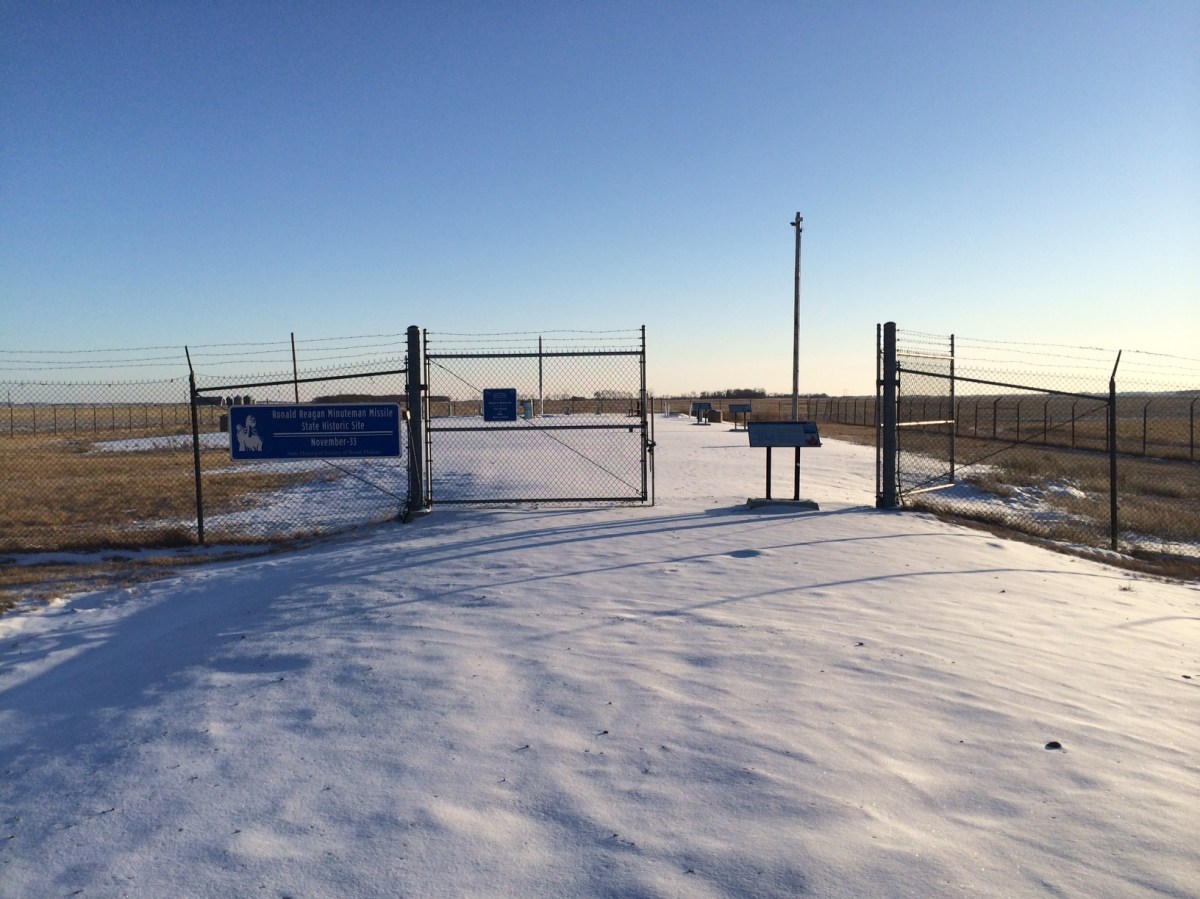
Cooperstown, ND is home to 2 of the missile silos decommissioned in 1997. Oscar Zero is the above ground facility now serving as The Ronald Reagan Cold War museum, but November 33 is right along ND Highway 200 east of town. It’s an underground silo with a security fence and cameras that no longer operate. The fence is open now, so one can walk right up and stand on the silo cover, which would’ve slid over on rails (also still present) should a launch had occurred when it was active. It’s location is quiet rolling hills and farmland surrounding the Sheyenne River Valley in east central North Dakota. The actual act of standing on the rail cover is a fairly unnerving act for me as I stop and read the permanent placards detailing the construction, mission, and ultimate decommission.
The pastoral setting seems disconnected and eerie inside the fence; I imagine the missile roaring to life, likely incinerating it’s below ground operators immediately after they’d made the impossible decision. Deafening anyone within a few hundred feet, adding to the terror that would surely await within an hour or so as a parallel experience of the rain of thermonuclear fire strikes across the globe. It’s at once overwhelming to imagine, filling my eyes with tears, that this was the intent of design and construction. Breathless for a moment, I steady myself exiting back to my pickup.
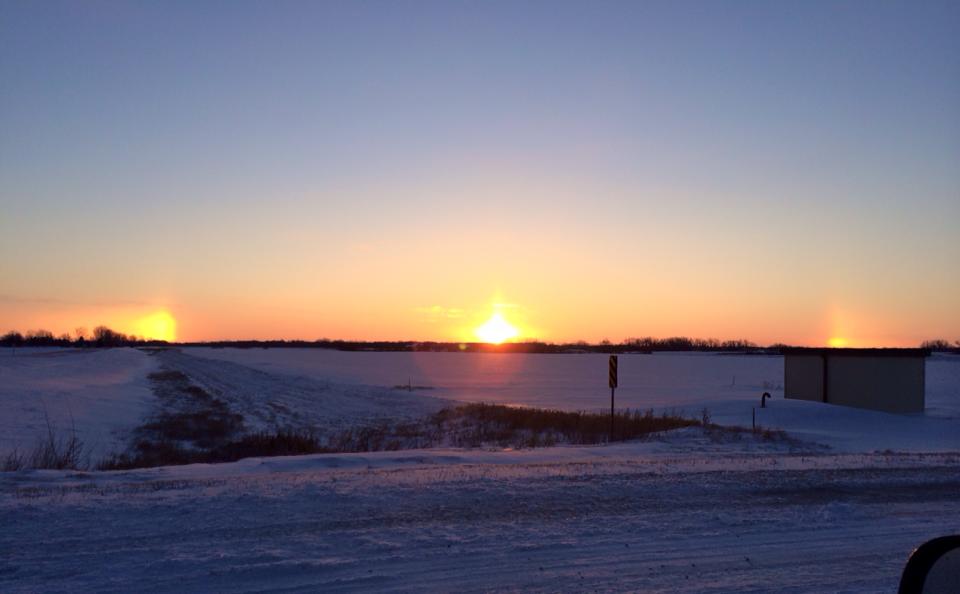
I have to back out to get out on the road, which adds to the strangeness of my stop this winter day, snow covering all. I turn to head into the sun-filled valley, windows down, crisp air fresh, heading home over the prairie rolling out before me-beautiful, everlasting, silent.
 Standing At The Gates Of The West