Skoll and The Sun Dogs

I was driving to the radio station out in rural Grand Forks this morning where I do my weekly call-in radio show when I saw a white Husky running along the side of the road. I pulled over to watch him when he stopped and turned to check me out, his electric blue eyes holding me, magical and fixated.

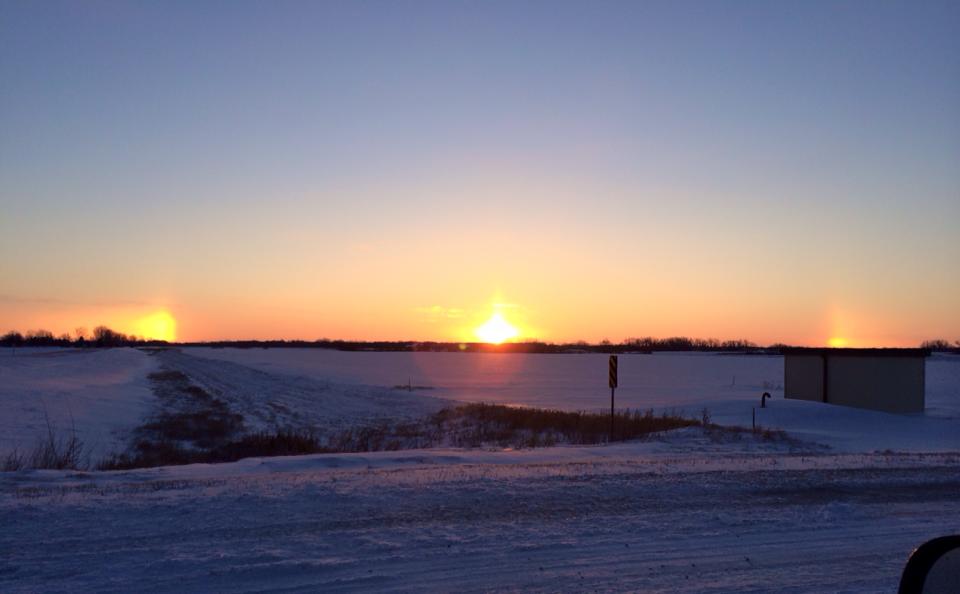
He suddenly took off at full speed, reminding me of Skoll, the wolf of Norse mythology as he blended into the snow-covered fields to greet the sunrise, replete with what I imagined to be his brothers, the sun dogs. After he finished his task of chasing Árvakr and Alsviðr to get the sun up for today, I wondered if his imagination followed the same path.

As the sun filled the clear sky, I was drawn back to the consciousness of sitting in my truck at the side of the road. I wish I’d gotten his picture as I was concerned that he might be someone’s dog that was lost on this frigid morning. Seeing he had a collar on when he flipped around and bolted toward the subdivision that rings the southern border of the city, I imagined he became aware of our presence in the 21st century too, having enjoyed the shared moment of our ancient Nordic past on this winter’s day.

November 33

North Dakota once had a high concentration of nuclear missiles, with most of the underground silos and above ground facilities developed in the 1960’s and 1970’s during the extreme arms race against the Soviet Union.  It’s hard to imagine now that these were on alert 24 hours a day, 7 days week with the idea that the crew may have actually needed to carry out their mission. Ultimately this would’ve been close to an extinction event.  Operating from the Grand Forks and Minot Air Force bases with numerous substations and radar installations, many were functioning in the the mid- to late-90’s until the Start II treaty was negotiated.  For some great documentation of the largest radar base at Nekoma, ND check Ghosts of North Dakota here:  http://www.ghostsofnorthdakota.com/category/nekoma-nd/

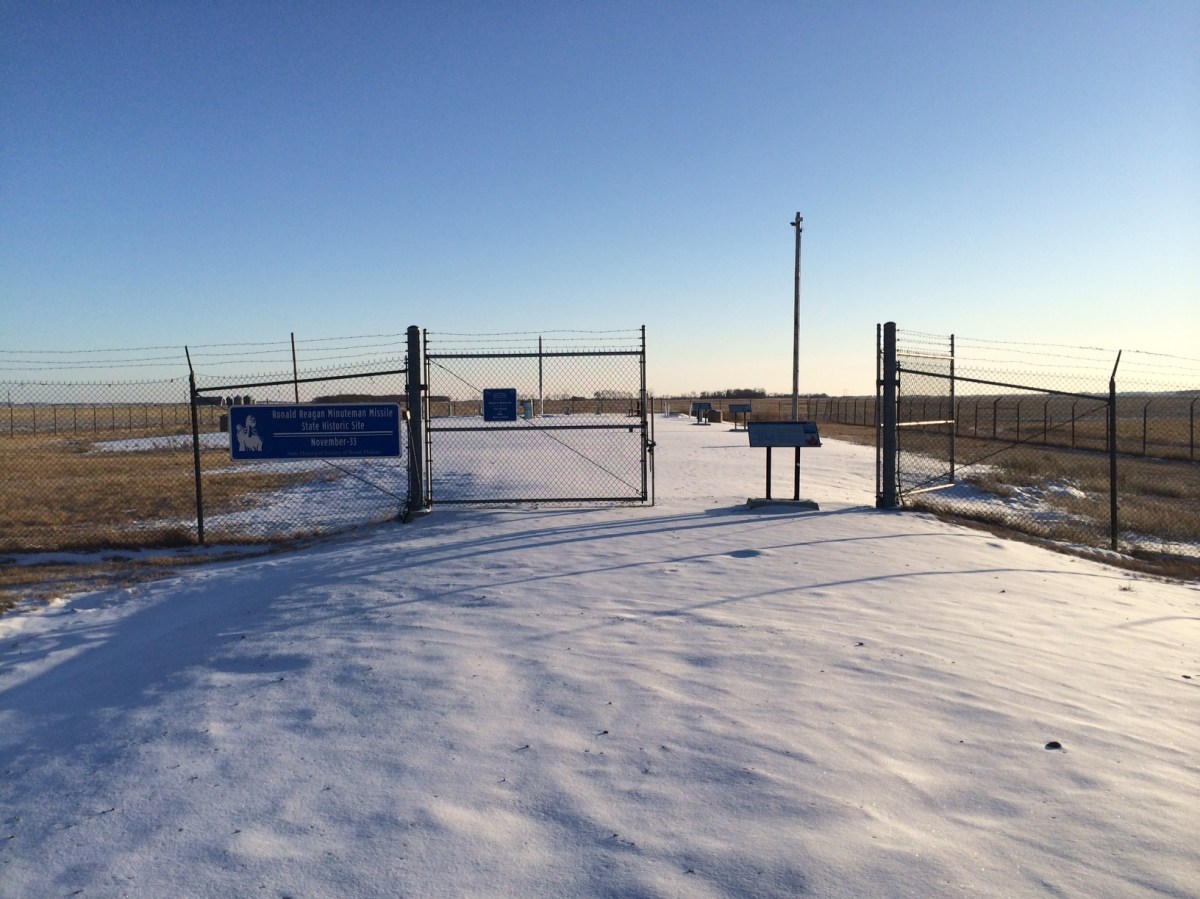
Cooperstown, ND is home to 2 of the missile silos decommissioned in 1997.  Oscar Zero is the above ground facility now serving as The Ronald Reagan Cold War museum, but November 33 is right along ND Highway 200 east of town.  It’s an underground silo with a security fence and cameras that no longer operate.  The fence is open now, so one can walk right up and stand on the silo cover, which would’ve slid over on rails (also still present) should a launch had occurred when it was active.  It’s location is quiet rolling hills and farmland surrounding the Sheyenne River Valley in east central North Dakota. The actual act of standing on the rail cover is a fairly unnerving act for me as I stop and read the permanent placards detailing the construction, mission, and ultimate decommission.

The pastoral setting seems disconnected and eerie inside the fence;  I imagine the missile roaring to life, likely incinerating it’s below ground operators immediately after they’d made the impossible decision.  Deafening anyone within a few hundred feet, adding to the terror that would surely await within an hour or so as a parallel experience of the rain of thermonuclear fire strikes across the globe. It’s at once overwhelming to imagine, filling my eyes with tears, that this was the intent of design and construction. Breathless for a moment, I steady myself exiting back to my pickup.

I have to back out to get out on the road, which adds to the strangeness of my stop this winter day, snow covering all.  I turn to head into the sun-filled valley,  windows down, crisp air fresh, heading home over the prairie rolling out before me-beautiful, everlasting, silent.

Drift

I started cross-country skiing (“Nordic”) in the early 70’s, when I was growing up in central Nebraska.  I’d learned to downhill ski (“Alpine”) in the late 60’s, when my family started making treks once or twice a year to some of the famed resorts in the Colorado Rockies, but I could just bail out the back door of my parent’s house on the adjacent golf course to cross-country ski, sometimes to the nearby college on the other side.  Like many central Nebraska courses, it had its share of loping hills as well as long flat fairways that were just ideal, especially in the days before groomed trails (although there were places in Colorado that afforded that luxury).   Along with one of my (still-) long-time friends, we’d spend hours trekking, talking (usually about music or some book we’d read). 
In those days, skis were waxed depending on the temperature of the air and the ground, sun or cloud cover, wind, and type of snow.  Dirt-free was always good, but powder topped with thin crust, with an overlay of “champagne” snow was what I always thought of as ideal.  More often than not in Nebraska, we’d be dealing with a lot of chopped, wet powder with crust, or just plain ice.  This might’ve necessitated re-waxing a couple of times during an afternoon out, and certainly if we were out after dark. 
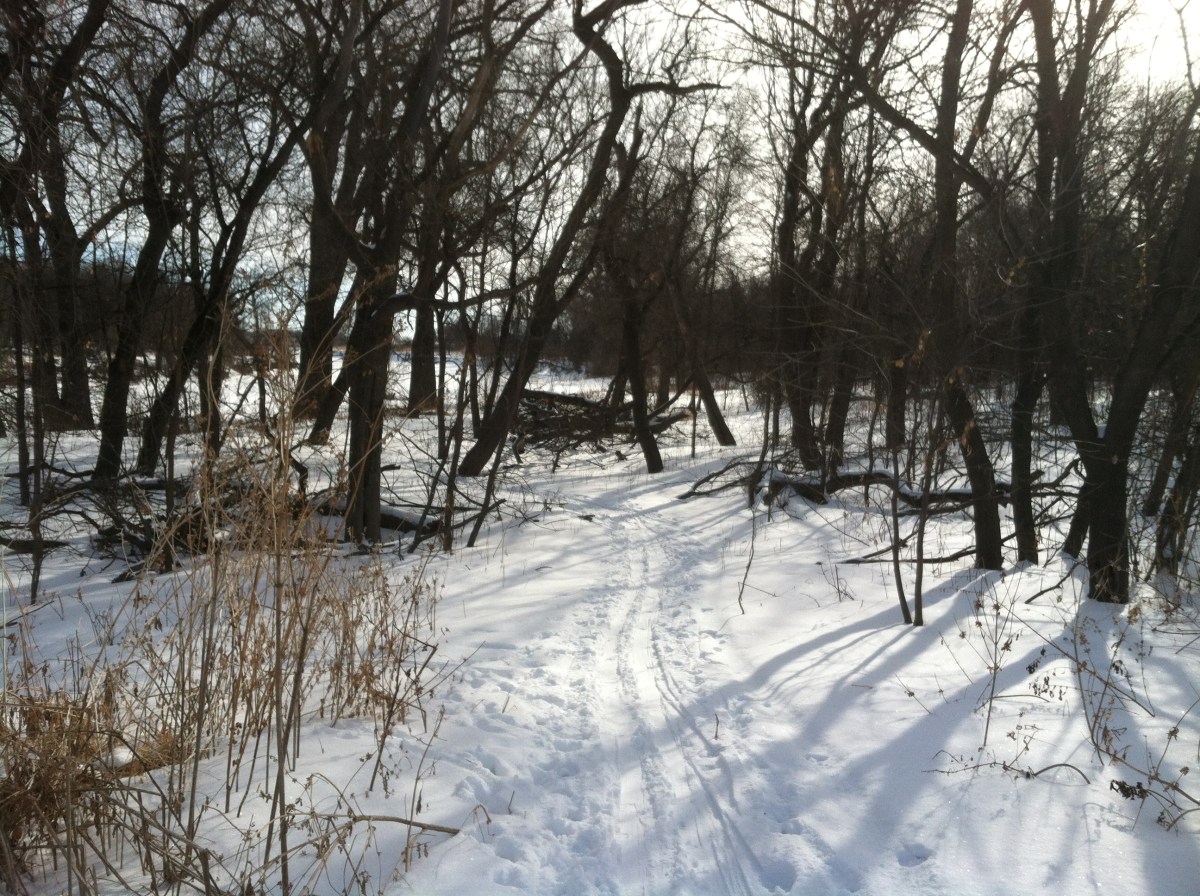
Champagne powder is actually something I ski more often in North Dakota along the Red River.  It’s a fine dry power, smaller flakes, but not really granular, favored by our cold weather. When there is a lot of snow on the ground with wind and drifts, it’s fascinating to watch, the wind is unmasked and visible in the waves of powder.   It’s many years since my youth in the Platte River Valley; I’m still skiing in this other wide flat valley in the North, gliding along as I feel and hear the wind, watching its own movie  imprinted on the drifting snow.
link “Drift” by These Imaginary Days  https://soundcloud.com/dead72/001-drift

Eyes To The Wind

The plane lifts off the runway, all are in silent reverie, the silver bird turning to pass over the city lights below. Cutting through and passing above the clouds, all of the human activity of the airport, the highways, and the neighborhoods are suddenly removed and distant. Everyone seems momentarily reflective of where they are going or where they’ve been as night unfolds above, stars and galaxies infinite.
As the clouds begin to clear, the fading sunlight gives way to the occasional trace of a headlight or yard lamp on the quiet plains below. On the wing, drifting along, eyes against the wind as auroras light the way where the ancient glacier meets the cold moonless northern sky, then, now, and again.

Time Traveler

We recently saw the movie “Interstellar”, and without giving too much away about it, a central theme is relativity in astrophysics addressing time. The scientific concepts presented were fascinating (and apparently, largely accurate), particularly with regard to ideas about time travel and dimensions beyond our experience. At its heart, the film was about people and relationships, transcending our ideas of time past, present, or future.

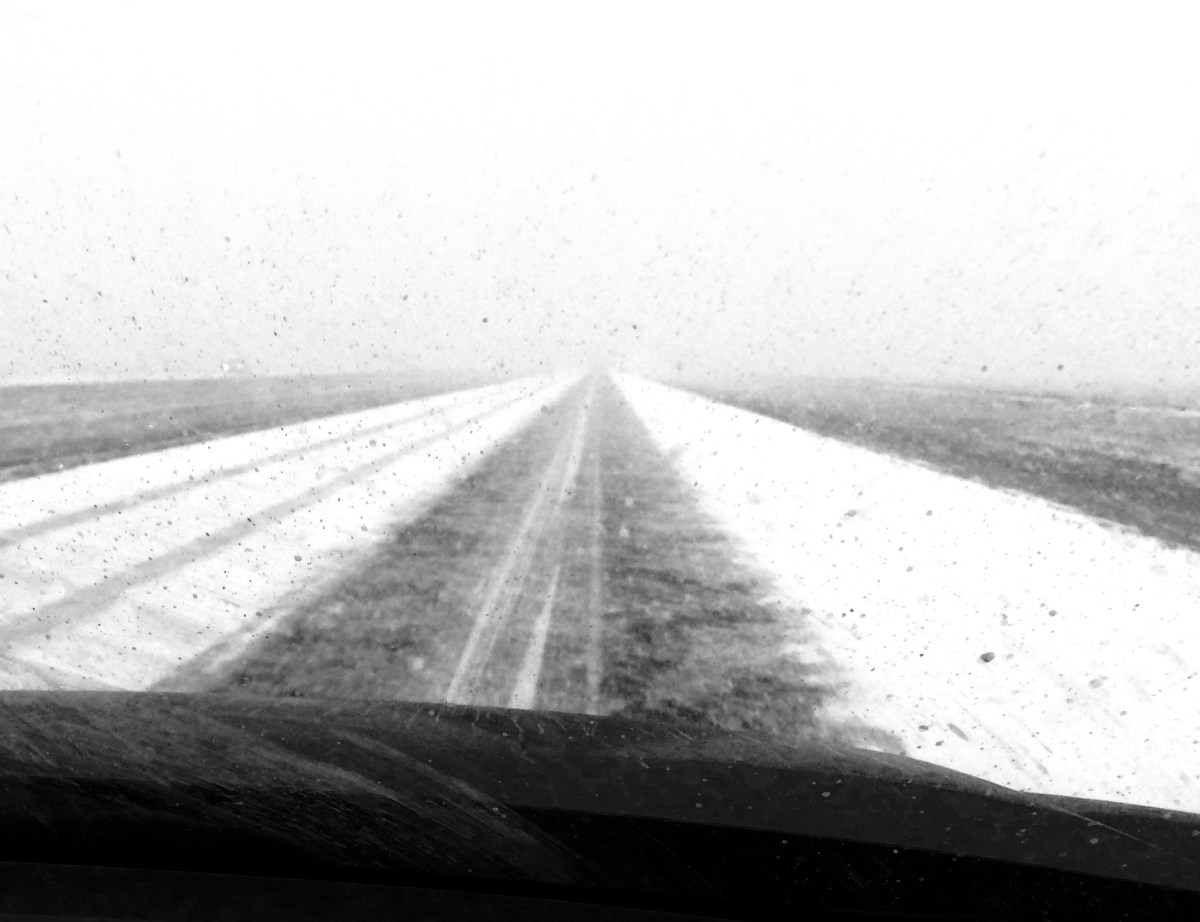
As we undertook our time compressed trip to see my family in Nebraska to gather for some holiday celebrating, I found myself thinking about the film as we drove hundreds of miles through what seemed to be a planet of wind, fog, and ice, otherworldly at times. Going down the highway, I thought of I-29 as my own means of time travel- sometimes thinking of childhood days, medical school, or other random occurrences (sometimes, just a previous trip). I might land on 1966 or 1986, maybe just for a moment, but always going through the “wormhole” (again, see the movie) ultimately back to today.

The cold solstice is delivered today as we make our way home. Time seems short as the sun has set before 5 o’clock. I can’t change time, but it is relative, and my cinematic stellar silvery road runs home- a continuum of time and memory of all the worlds I’ve seen.

St. Mike’s and the great beyond

I’m an Associate Professor at the University of North Dakota School of Medicine and Health Sciences, and it’s an exciting time for us here in medical education. In a little less than 2 years’ time, we’ll be moving into a new health sciences school, which was a long time coming. No doubt, this is a once in a lifetime opportunity, and I’m grateful to have this chance to be part of an advancement of knowledge and education.

Currently, we’re in a building that is actually the old St. Michael’s hospital, which was constructed on its present site on North Columbia Road in 1951. It replaced the original St. Michael’s, built in 1907 which is still standing right along the Greenway trail facing the Red River of the North at the Kennedy Bridge (U.S. Highway 2, the “high-line”), which links North Dakota and Minnesota. It’s interesting, as we are a medical school that doesn’t have a University Hospital or Clinic system, yet we are in this old hospital, a building that has been almost solely used for classroom education, research, and administration- not for patient care since it became a medical school. Our new building will have many design elements that will foster communication and “face time” interaction. If you were to design a building that caused people to be isolated, it would be our current one; of course, a patient care environment would require privacy and places to perform procedures. This was a very modern facility when opened, leaving behind the then-common practice of having large “wards”, where many patients would be in a large room separated by stand up cloth room dividers. The original medical school was founded in 1905, and has been in the current location since the early 1990’s after decades in a building called “Old South”.

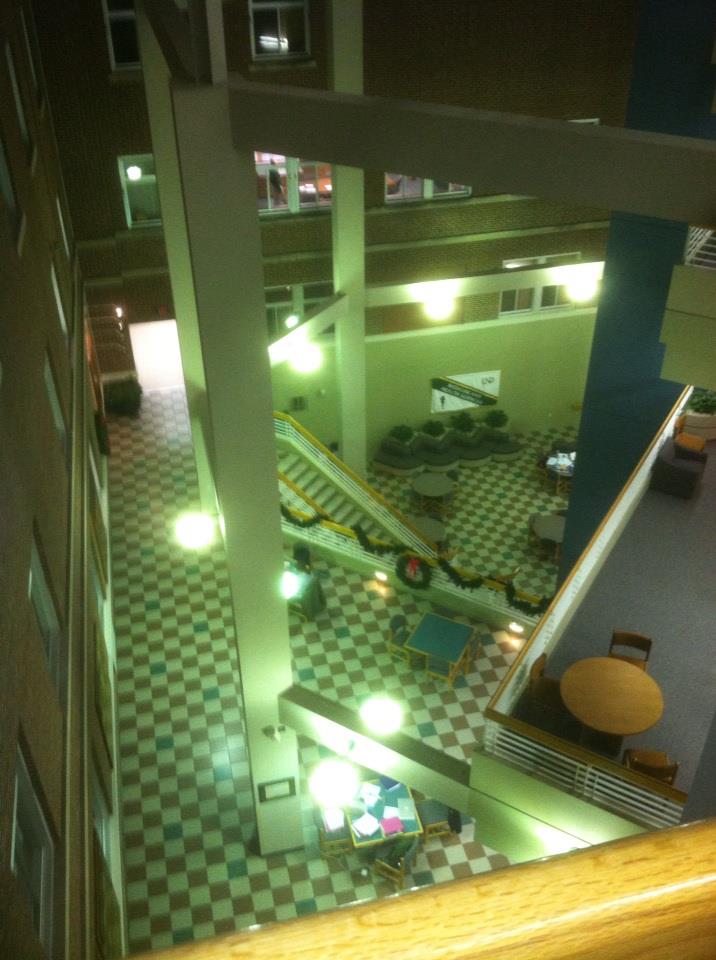
As you walk through the Columbia Road building, it’s very apparent which parts of the building are relatively unchanged from the 1950’s, and other areas that are much newer. When I walk through it, especially at night when there are few others, if any, around, you can hear it breathing; the energy of all the souls who were born here and those who passed away after a long full life or perhaps prematurely or unexpectedly. I think of family members or friends pacing these same hallways waiting to hear news on their loved ones. As well, there are pictures of every student who graduated from here to go on to their careers, some now long since gone. Faculty portraits also garnish some areas; I can still hear some of their voices from when some were my mentors all those years ago. It’s living history.

We have a chance to continue to bring all of this important history forward to our students and all of North Dakota in the coming years. Hopefully, a future faculty member or student will pause late at night considering the relics of the past and be mindful of what came before, enriching their own paths to find knowledge, old and new, ever forward in service.
fourches de la rivière

I spent the day in Winnipeg, Manitoba on Saturday, it’s about 135 miles from where I live in North Dakota. Months ago, we got tickets for the Black Keys concert at the MTS center, which was the original intent of the trip. My son noticed that the new Canadian Human Rights museum had opened recently, so we made some time for that during the afternoon. Dalton is particularly interested in this topic for a variety of reasons, so we decided to check it out.

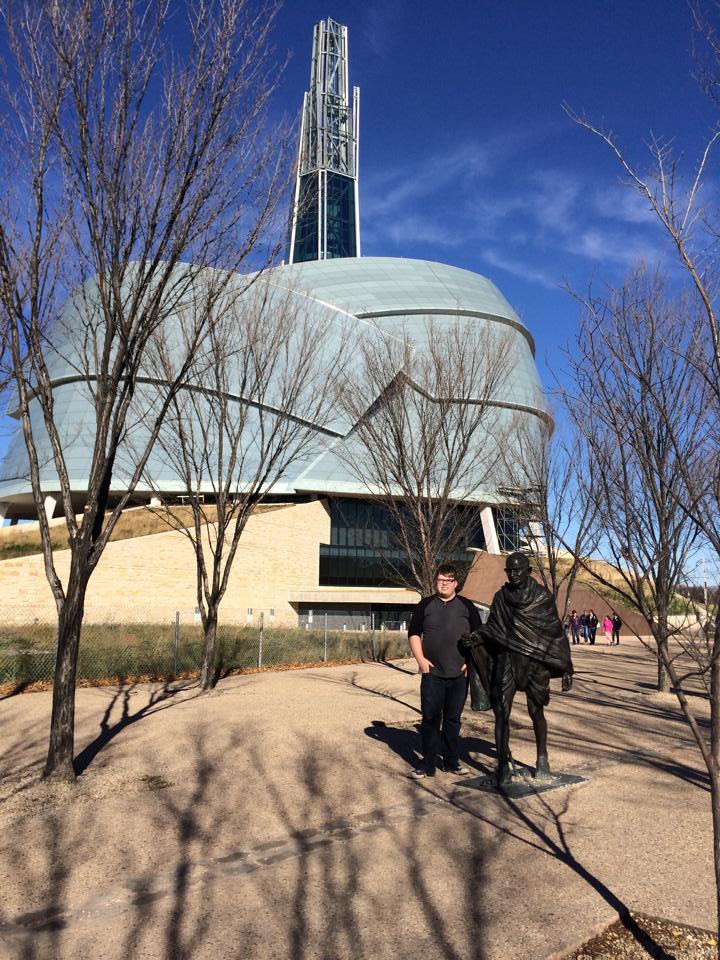
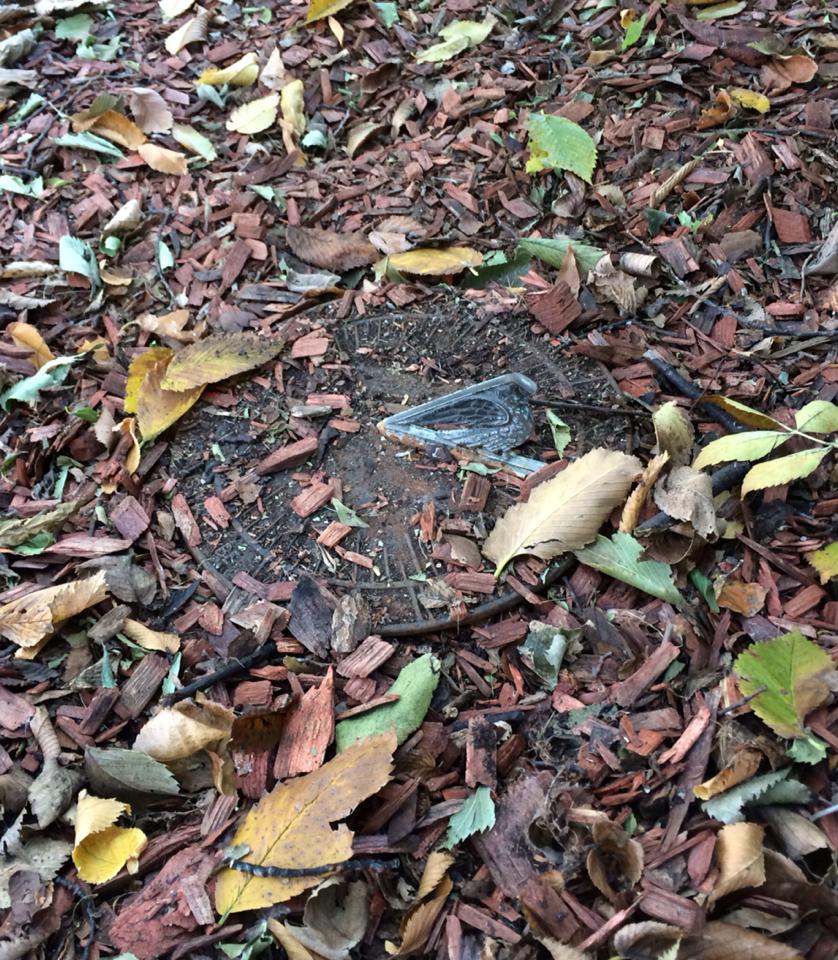
From the get-go, it’s apparent that this is a very special place (see pic)-the first new museum in Canada since 1967. Designed by Antoine Predock, the architecture informs the experience perhaps more than any building I’ve ever been in. Although only 5 of the 11 galleries were open now in this the very early days of this museum, the message is very clear. The many perspectives of human rights are here and most notably, their violation; going from the dark of the lower levels to the progressively lit (by mostly natural light) upper levels and ultimately the 100 meter tall viewing tower. Stories are shared through multi-media means, including music, art, film, and sound. We’re at an area called The Forks- the junction of the Assiniboine and Red Rivers- and it has been a gathering place for people for thousands of years. It’s fitting that the museum is located in this space, and even more so when learning that the dig for the site prior to construction yielded tens of thousands of artifacts, including a bronze cast footprint thought to be 4000 years old which is built into the lobby.

I didn’t want to go to the viewing tower, which is actually the penultimate area of the building on the tour; considering the stories of bravery and heroism of human experience I’d been hearing for 90 minutes, I thought I should at least try it. It was a rare warm, clear, beautiful October day in the city, and the 360 degree view bathed in the autumn sunlight was very freeing. Sharing the experience with my son and the tour group forged an unexpected bond; as I looked down at the river, it was clear we were carrying on an ancient tradition at this confluence. Gazing over the city itself with its bridges, streets and traffic, the minor league ballpark, the train station, and warehouse districts I couldn’t help but feel tied to the ritual of this meeting place. We paused in the contemplation garden as the last stop of the tour before we made our way to dinner, where we talked about the experience we’d just shared before making our way to the show.

There is a moment in every concert where the lights come up and a flash of energy is suddenly common to everyone in the hall; smiling, dancing, embracing. We’re gathering today in celebration of our human experience not far from the ancient rendezvous, where the drums sounded and voices lifted. Rock On, friends. We’ll meet again.

The View From Forty Seven Five Five

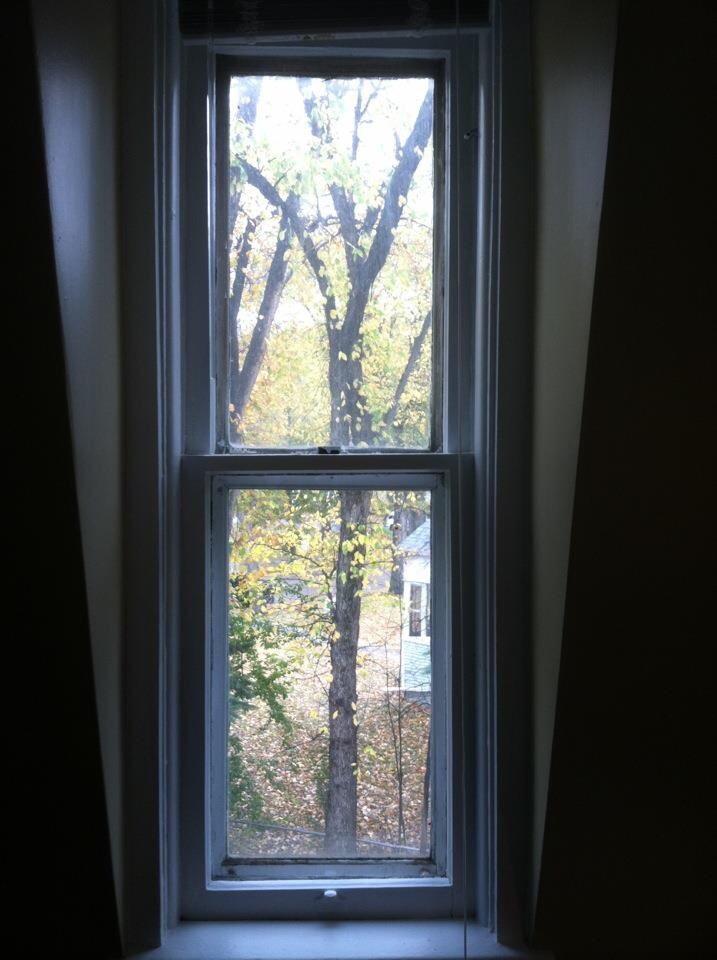
We’re getting deep into autumn here in northeast North Dakota, just a few blocks from the Red River of the North. I took a couple of walks in the city today, the first was around my neighborhood, where most of the houses are 100 years old or more, but so are the trees. Growing up in Nebraska, I witnessed the loss many of the old canopies due to a mass casualty event of Elm trees in the 1970’s into the ‘80’s. The postcard perfect (really, it was a postcard) cover of the old highway into the campus of the local university is minus this canvas altogether now. It occurred to me as I followed what was the old 19th century “county road” (now Reeves Drive) on my trek and it’s just absolutely peak right now. I’m probably more mindful of it as a result, and it was nearly overwhelming.

Soon, it’ll be on to the formidable task of winter, being slowly signaled in by the turn of these leaves in their deciduous cycles, and It’ll be the order of the tall and hearty fir trees to begin their long, cold vigil. The daylight changes here ‘tween the solstices is dramatic. On June 21st, sunrise is 5:29am, sunset is 9:31pm, so we’re looking almost 16 hours- even longer with the twilight on each end extending it at least an hour. We can go to a night game at the baseball park, and it’s not dark yet when the game’s over. When we close in on Dec 21st, we’ll be down to sunrise at 8:15am and sunset of 4:48 pm- a reversal of over 7 hours. I already feel like I’m going to work in the dark and coming home in the dark. When this cosmic flip occurs and the earth starts to turn its back on the sun, concordantly and semi-consciously turning away from life is easy; barricading from and cursing at the cold and wind, thinking of warmer spring days ahead, forgetting that today is the day.

This day is a Sunday, I’m caring for my daughter as we share in the simple task of doing laundry, stopping to visit about the football game or listen to some music; she has a lot of medical problems, and isn’t very verbal, but her exclamation of “wind!” is as crisp and clear as the day outside, her best expression of her ever-knowing of “the now”, as the leaves rustle in a loud, last protest on their trip to the ground- I’ll take their challenge of embracing the life force of every day that is winter here in the North Country. These are the days.

(thanks Aaron B for moving this to the front burner)