techno waves
bring me cognition
of autumns angled sun
Coffee aside
the infinite wind
and its threshold I pass
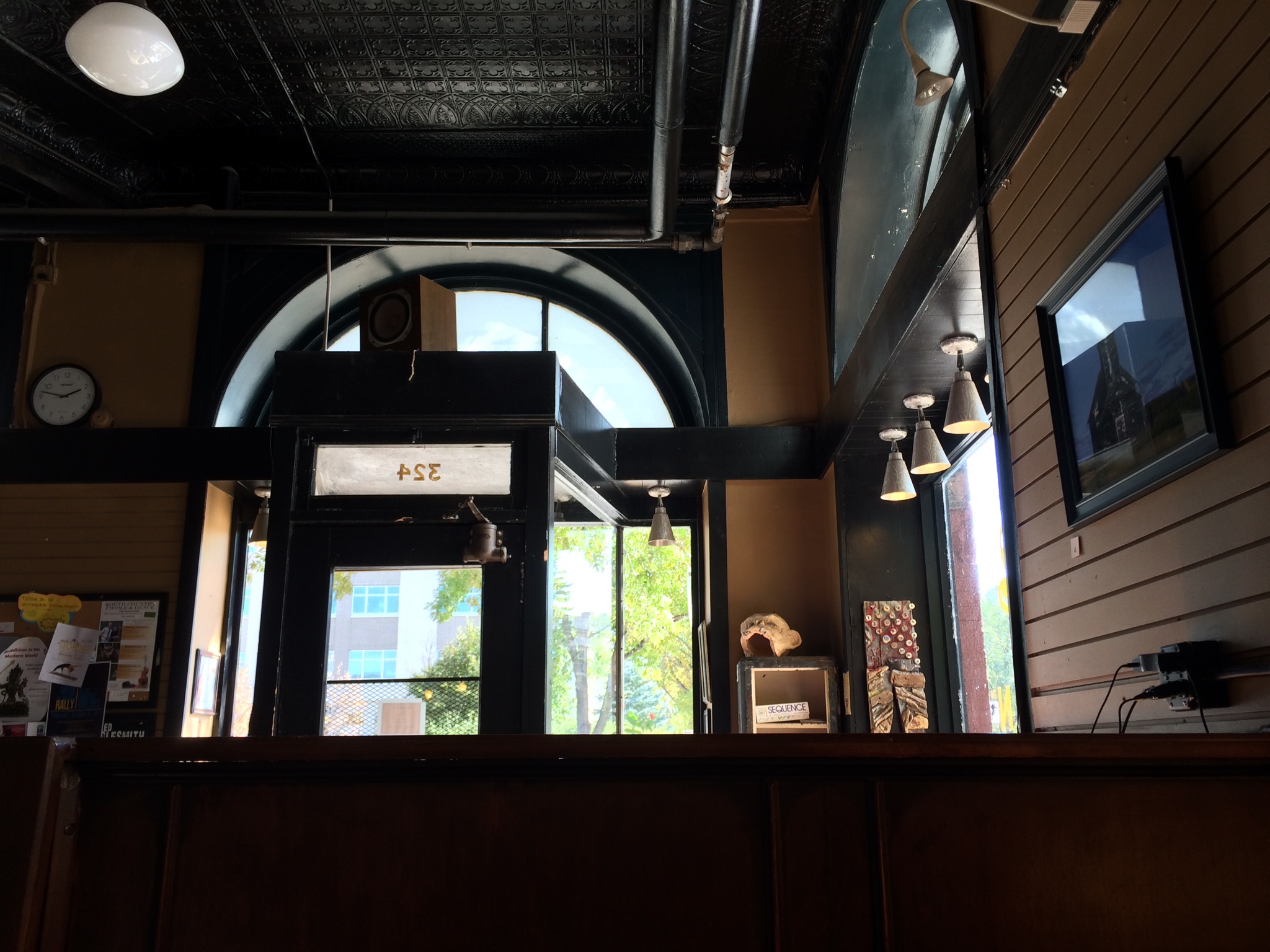
techno waves
bring me cognition
of autumns angled sun
Coffee aside
the infinite wind
and its threshold I pass
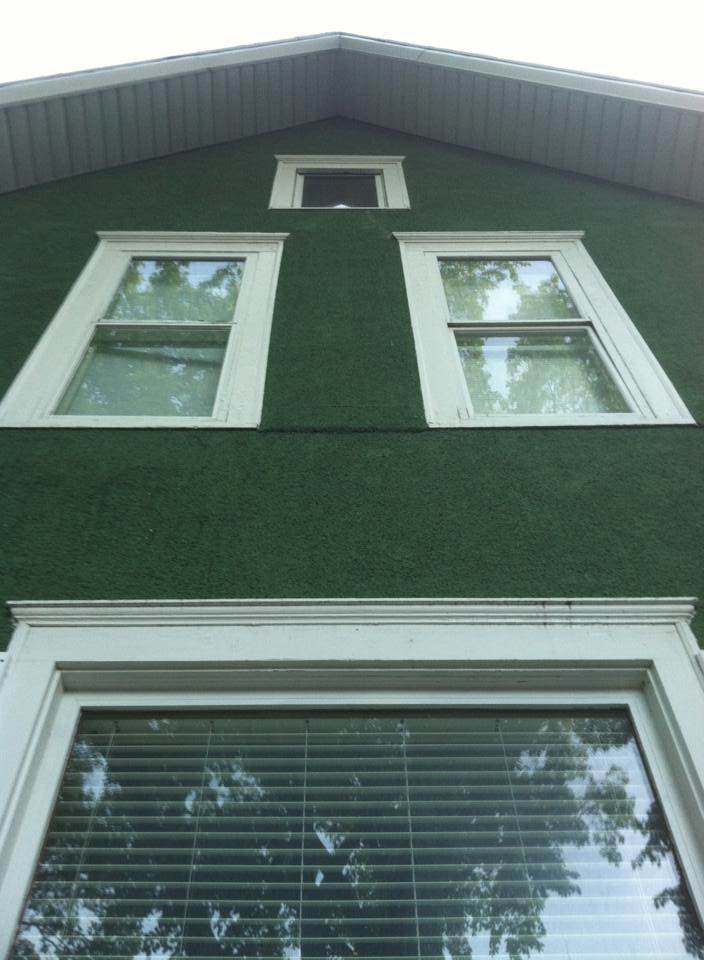
In 1885, Gilbert Pierce was the Governor of Dakota Territory, the Chicago White Stockings (now known as the Cubs) were the champions of the National League in its 10th season of operation, A, T & T incorporated, Mark Twain published “Adventures of Huckleberry Finn”, and Johannes Brahms premiered his 4th Symphony. This is also the year our home was built by John Kenkel in what is now known as Grand Forks’ Historic Near Southside Neighborhood.
I’m watching it rain outside from my window, and I’m thinking of the people who lived here over the last century and a quarter- watching the weather at times, no doubt, which is often considerable in North Dakota. What were their struggles, and what were their triumphs? They must’ve celebrated North Dakota statehood some 4 years after their home was built, and the turn of the 19th century to the 20th- how modern that must’ve seemed! Soon a service station would open down the street, as well as the grand churches of the neighborhood. The Civil War memorial was dedicated in 1913 in one of the 2 small triangle parks, they must’ve all turned out for the ceremony in a neighborhood celebration.
Not a grand mansion in the neighborhood, it is constantly revealing its charms and quirkiness. Like many, this home was eventually cut up into a multi-family dwelling, but has been converted back. Over time, we’ve found original woodwork and grand staircase parts, many old doors, and the coal chute, all testaments to the era of pre-statehood Dakota. The street out front was dirt, probably for decades, referred to as the “county road” in the old handwritten abstract and title documents, where horses, carriages, and eventually cars traversed.
I can imagine the home in its sorrow witnessing 2 floods of the century (1897 and 1997), bearing out the Great Depression, sending sons and daughters off to war, the passing of family and friends; the joy of holidays spent, marriages celebrated, and welcoming new additions to the family into the world- some probably born here at the house. These families all lived each day, pondering the future and leaving a legacy for us. I pay respect to the past imagining their memories and dreams, hoping those 100 years from now will do the same.
It’s a huge theatre in the round, my path taking me originally toward and then around it. I’d planned to stop and look at a ghost town, but it remained behind the waving torn curtain of the storm in the distance. I turned the radio off to better hear the performance, an ancient one that has been going on long before anyone’s arrival here. The road adds a squared off set of vantage points that seem sort of artificial, I know the storm is indifferent to me as its audience.
I see lightning strike the ground a few places around me, in my hair a flash of static, adding to the feeling of being close. The resultant almost instantaneous thunder is palpable; a hypnagogic-like sense of state now, I’m one with it as time suspends, a protracted moment of cosmic teleogenetic forces that started billions of years ago riding ever onward. I feel painted into the impressionistic colors of the rain filled sky and golden fields of barley as a gray barn rises on the horizon signaling storms end as I approach and pass on by.
As time now resumes and passes, I think now how some look at the prairie and see nothing. Today I see a place of expanse where the mind and spirit take rest, with renewal at every vista.
We spent the day in Fargo for my birthday today watching a minor league baseball game. Baseball has offered itself as a remarkably consistent companion to me over the years, complementary with its nuances and quirks, and today was no exception; a game with numerous ejections, weird plays, and a blowout loss for the home team to Sioux City. It was a nice sunny day with a few clouds and a breeze that wasn’t quite autumn, but definitely not summer. As the game progressed, in this early fraction of the seasonal change, I thought about the ballplayers, most of whom will return to regular jobs in the next several days as this baseball season ends, and the many, many times I’ve sat in ballparks for my birthday over the decades.
The interstate home had a lot of construction, so I decided to bypass it and go on old U.S. 81, now relegated to the status of several connected county roads but still a direct route from Fargo to Grand Forks. I drove through the farm fields filled with maturing crops including beets, sunflowers, barley, and corn, and thought of my own history working on my grandparents farm back in the 1970s in Nebraska- we listened to a lot of baseball on the radio in those days, including the Cardinals, the Royals, and the Cubs on the old “clear channel” broadcasts as the daylight of early evenings faded, my grandfather taking a break to smoke his pipe while we drank some cold 10 ounce bottles of Pepsi out of the cooler.
As I got within about 30 miles of home tonight, Lisa was sleeping, and I noticed the sun had been getting more low-slung in recent days, beginning to hasten the trip toward fall and eventually winter. As a result, all of the cycles I’d seen today became apparent. The 3’s and 9’s marking time with no clock in baseball, birthdays marking our own individual years, and the tempo of seasons with the crops that follow their beat. I turned up the music on the stereo (in this case, the Grateful Dead, another frequent companion) to find my own groove, driving that old highway and riding the planet on its turns through the universe in its infinite cycles, content in the reverie of the fading light guiding me home.
Artificial sunrise extends its greeting
As I roll on the down the road to the city
Surrounds me now
While the rain breathes and
lights alive on the streets
When the day’s last run we meet
A couple of weeks ago, I was riding with my friend Dave to Winnipeg to catch a Blue Bombers football game. It was a great day, sunny to partly cloudy, and we were enjoying some mix discs I’d made for the road (mostly 21st century rock I though Dave should hear). Like always, we had to do the border crossing and I started thinking about the evolution of border stations over the 25 years or so I’ve lived in this part of the country while the line was a little longer than usual this time going into Canada.
This used to be an experience not unlike a toll booth, and an agent might actually be in the station separate from the main building, where I might have to produce a driver’s license crossing either way across the international border. In the days before 9/11, at most, I might get asked if I was bringing Cuban cigars into the country (which, in fact, sometimes I was). The only time I’d ever really had an issue was going to see the Rolling Stones at Winnipeg Stadium in the summer of ’94- as it turns out, rock concert attendance must be some kind of profiling, and in addition to having a pony tail and loose insulin syringes on the floor of my Toyota pickup (complete with Grateful Dead window stickers) I spent a little time watching the agents search my truck. After they put the door panels back in, I was on my way. Maybe that was a foreshadowing of what was to come.
Now, it’s like a fortress on both sides, with high technology including digital cameras, and I would assume directional microphones (really, I’m not that paranoid, but maybe, you know?, as suggested by my friend, who is an attorney). We’d gone to a game last fall and actually had to go inside, where they decided to run us through Interpol, the international criminal database. Apparently, it’s standard operating procedure to inquire if they will “find anything”. Now, I know what it’s like to sit in the back of a police car (let’s just say, my youth was “colorful”), so I tell them “I don’t know”; my friend gave a similar response, which in retrospect seemed upsetting to the agents. Fortunately, we weren’t revealed as some kind of criminal masterminds, and we made it for kickoff easily.
This time, we’re pulling up to the station, and I dropped my passport right into the slot between the seat and the center console- If I’m appearing panicked trying to get it (which requires unbuckling my seat belt, turning around in the seat and desperately trying to snag it), that can’t be good, and I’m also focused on getting my sunglasses off in time, as the agents don’t like those either. Everything was cool, and we breezed through continuing to make good time to get to the city.
As we drove away from the border crossing, the prairie stretched back out before us, unthreatening, with southern Manitoba’s appearance more or less the same as the last 50 miles of North Dakota prior to the station. We clicked by the small towns, railroads, fields, and grain elevators, reflecting on the changing times in security. Fifty years ago, it was all about nuclear capability, not border stations. We weren’t far from an abandoned radar base at Nekoma, North Dakota, and I often pass by empty nuclear missile silos all over rural North Dakota (check out Ghosts of North Dakota to see some great pictures).
It wasn’t long, and we passed through the gates at the stadium, where we enjoyed the beautiful summer night and some football, Canadian style; then we were on the way home after our usual ritual of grabbing donuts and coffee at Tim Horton’s, accompanied now by a full moon which I noticed at the game, but was even more welcome beyond the city lights. After a while, I saw the crossing station in the distance, a beacon on the prairie, where soon the transition was once again businesslike; after the passage we sailed down the road, clicking off the small towns, railroads, fields, and grain elevators as we cranked the music back up, which minded no border, and celebrated the night.
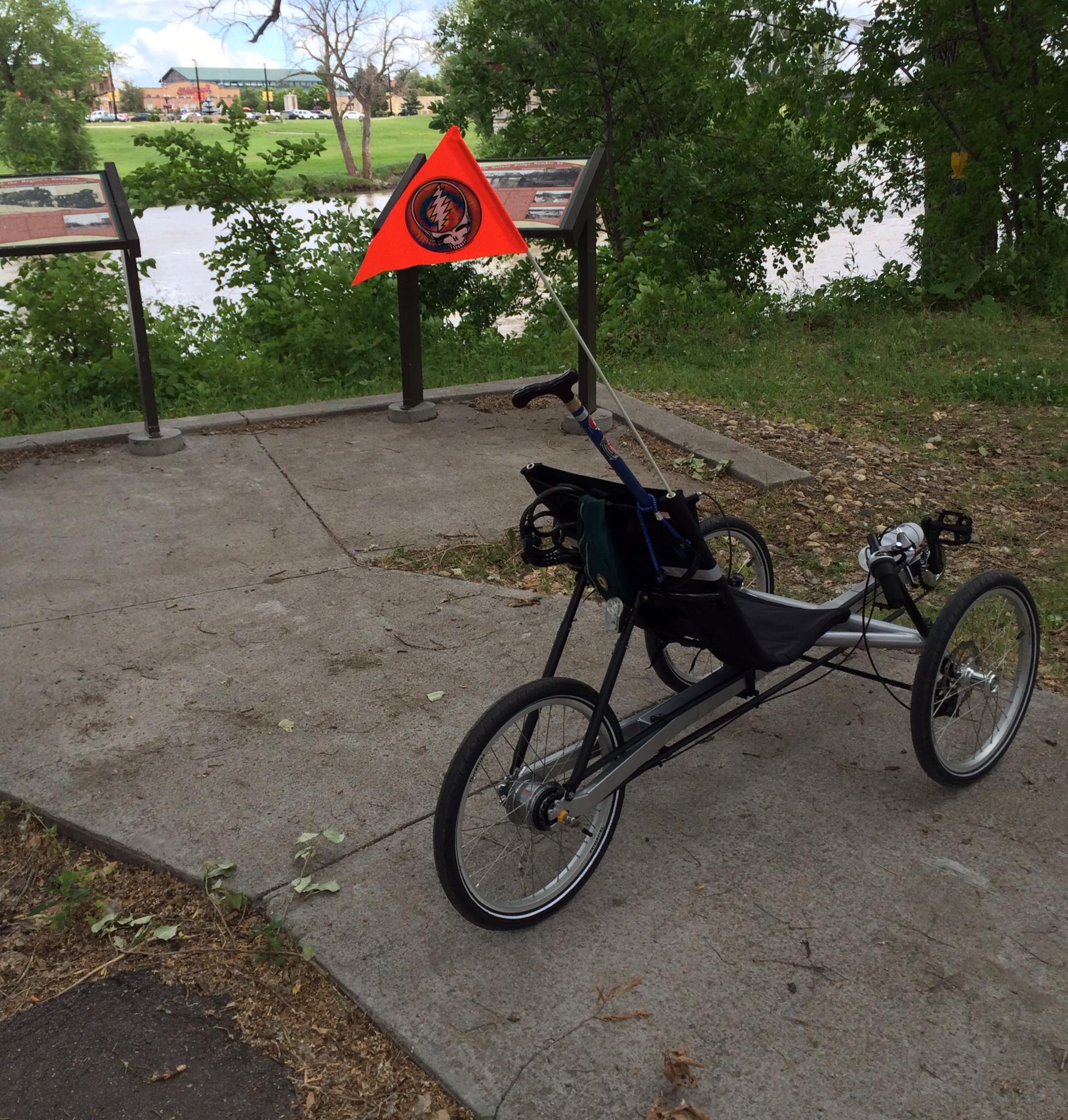 The water is running fast, sounds of stealth and cold in consonance, punctuated by the creaking and snapping of whole trees by the larger chunks of ice; dark night, not really seen, although I reflexively turn toward the sound. I don’t know where my vantage point is, it’s only a little above the water which isn’t a place I could’ve possibly been. I can sometimes feel and hear it just before I’m awakened in the night by it, even though over 15 years has passed.
Like many, I suppose, the floodwalls and dikes seemed like a welcome separation from the river and the memories of the event- I’d never have to look at it again, save to cross the bridge to Minnesota. Everything is pre- or post-, lost homes, relationships, jobs. It’d all be buried and suppressed. I could never bring myself to watch the old videos of the newscasts from that day and the days that followed, although I’d been to a photography exhibit at the art museum which proved to be emotionally troubling for some time to follow. I couldn’t leave, I couldn’t stay.
I don’t know if it was time that healed this nearly mortal wound in a major artery of a city, but when I cross the floodwall now, I see miles and miles of parks- not the threat and destruction of the past. I know the places where the trees line up in a straight line along now gone streets or the playground where my kids used to play. Now I cross-country ski or bike here, the occasional reminder from an old driveway entrance, sidewalk fragment, or oddly placed still-functioning streetlight bringing back the neighborhood now strangely separated from the city. The Red rolls on. And so do I.
Otherworldly gravity’s fade
By that low blood moon
Hudson bound
riding over the smooth divide
Into that slow wide tide
(original post on Facebook May 15, 2014)
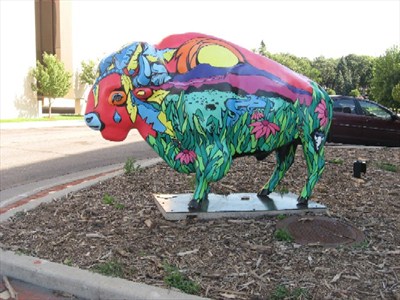
A recent trip to Fargo for my every-few-weeks live baseball fix also included a trip into downtown to pick up some art pieces for Lisa’s store, where I took a short trek through part of downtown. While doing this, I was practicing some mindfulness exercises (‘think of each step on the earth”) and although I’d noticed the Bison sculptures on the sidewalks before throughout, “Heartbeat of the Red River Valley” painted by Pat Kruger crossed my vision after scanning the railroad tracks for oncoming trains on Broadway crossing toward Main Avenue.
The body of the beast shows expansive scenes of the plains and the mountains, once the province of Tatanka, but the singular tear falling from the left eye clearly represents sadness and loss and was absolutely fixating.
A couple of days later while driving on State Highway 200 in central North Dakota, the smooth rolling hills shaping my awareness, bringing the image of this sculpture back to me. I thought of thousands of bison across the land where I so easily now drove this gray ribbon of road and was filled with waves of sadness. Stopping my pickup, I got out, feeling the fading sun and the smooth breeze on my face. Recalling my studies in college of Jung’s archetypal Collective Unconscious, I wondered if the Bison too have an unspoken communal memory of times past, so brilliantly depicted on the painted sculpture now locked back in its urban home. I felt an unexpected connection to the land and the sky, realizing at that moment that’s what art does- finds and connects our experiences, both known and unknown.
I’ll be looking forward to seeing him again in his urban garden, feeling and sharing the ancient memory of the grass covered prairie, being once again mindful of the richness of our collective experience.
I am struck by the improbability of existence; hearing, seeing, smelling, and feeling the rain and cold near the old Abbey apartments by St. Mary’s, my perception is the product of physics and biology on both sides, 14 billion years in the making and now coinciding at this exact moment in time.
 Standing At The Gates Of The West